Join us this autumn at Tenkawamura Højskole, where the Danish folk high school meets rural Japan.
From October 10th to November 8th, we’re hosting our first international program, bringing together participants from Denmark, Japan, and around the world to live, cook, and talk together, with courses explained in both Japanese and English.
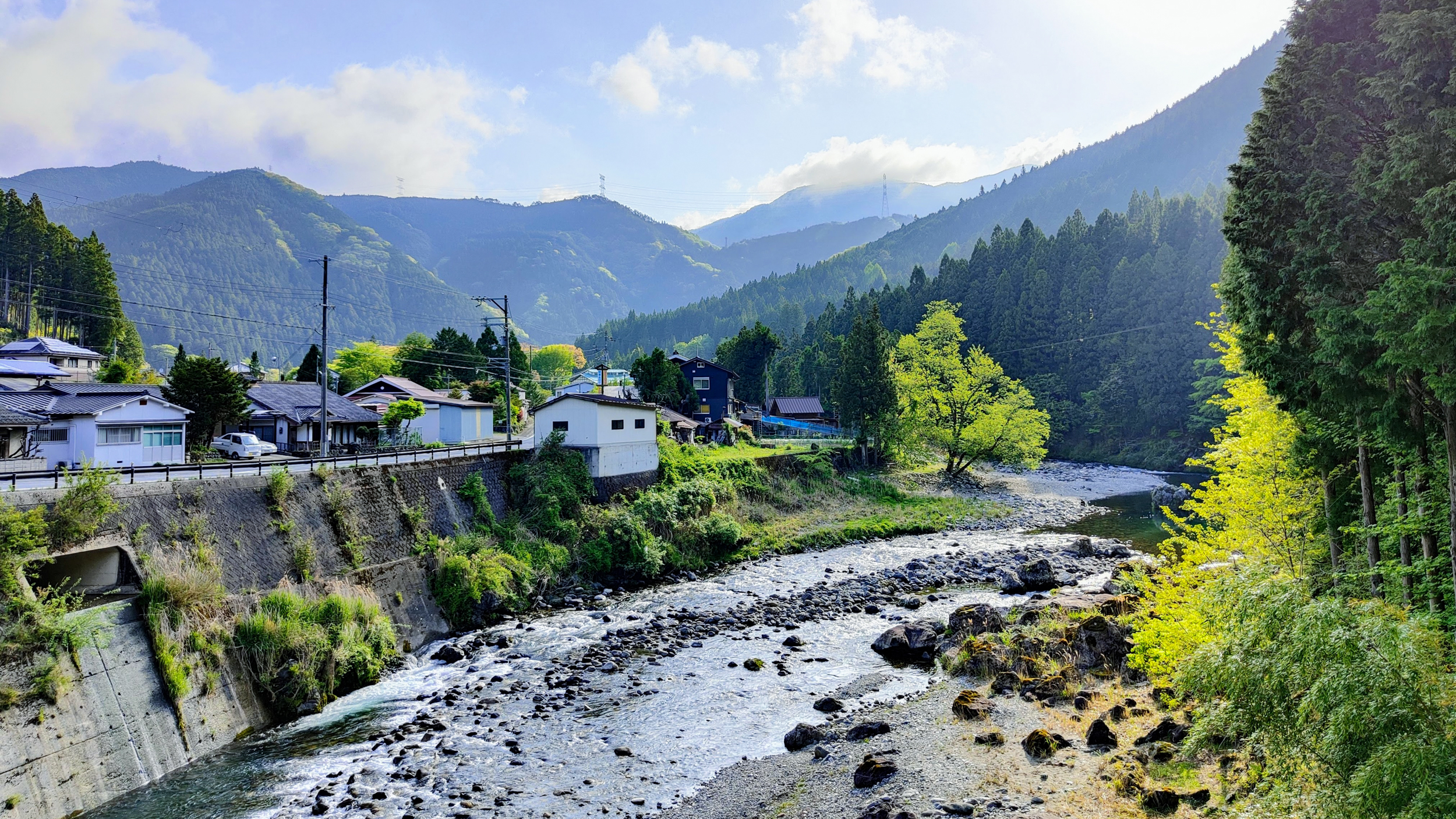
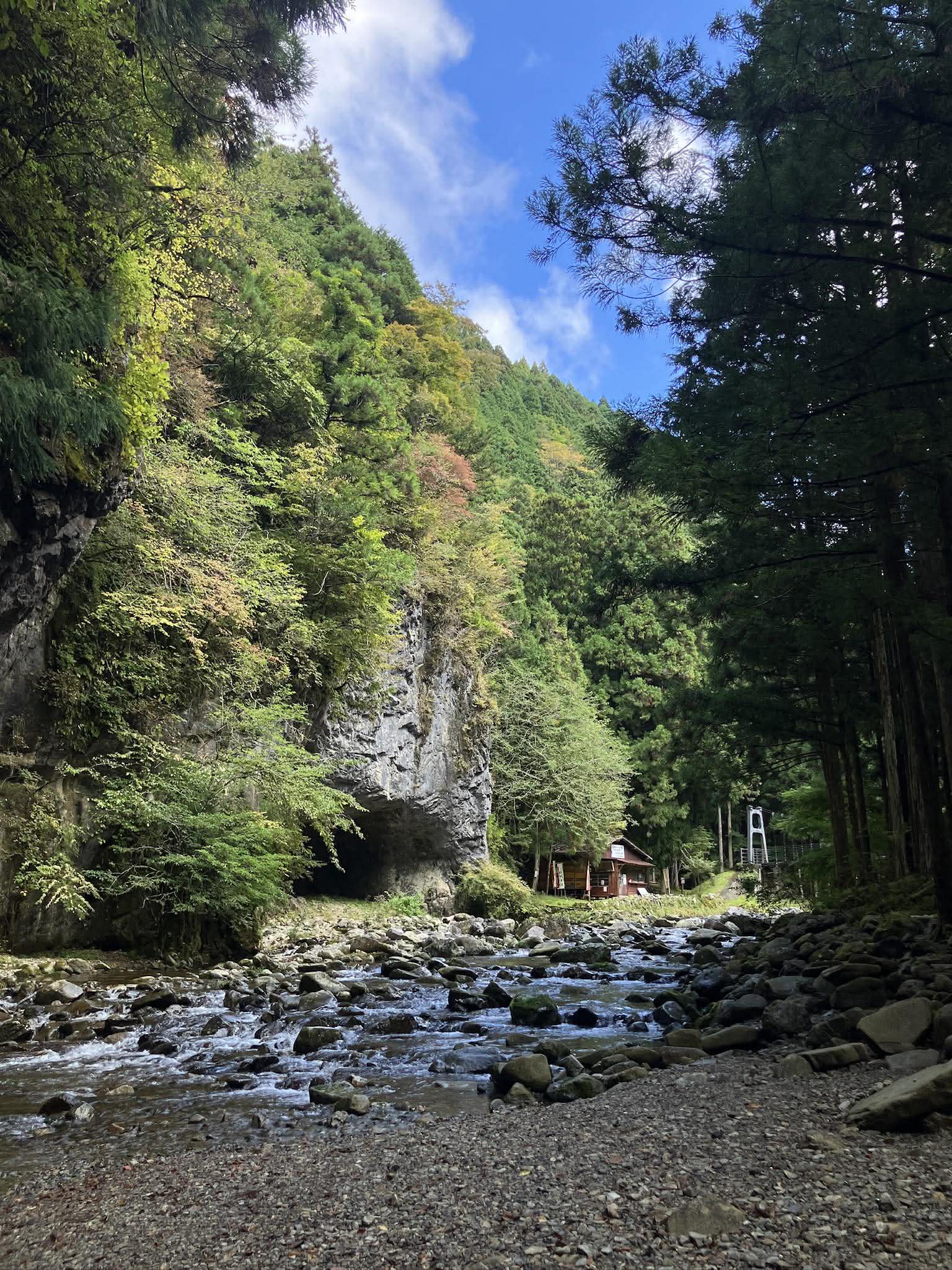
Tenkawamura is a small village in the mountains of Nara Prefecture that has drawn pilgrims to its sacred sites for over a thousand years. It’s a place full of history, with many traditional buildings and temples, and a place where you can experience the stunning wild Japanese nature.
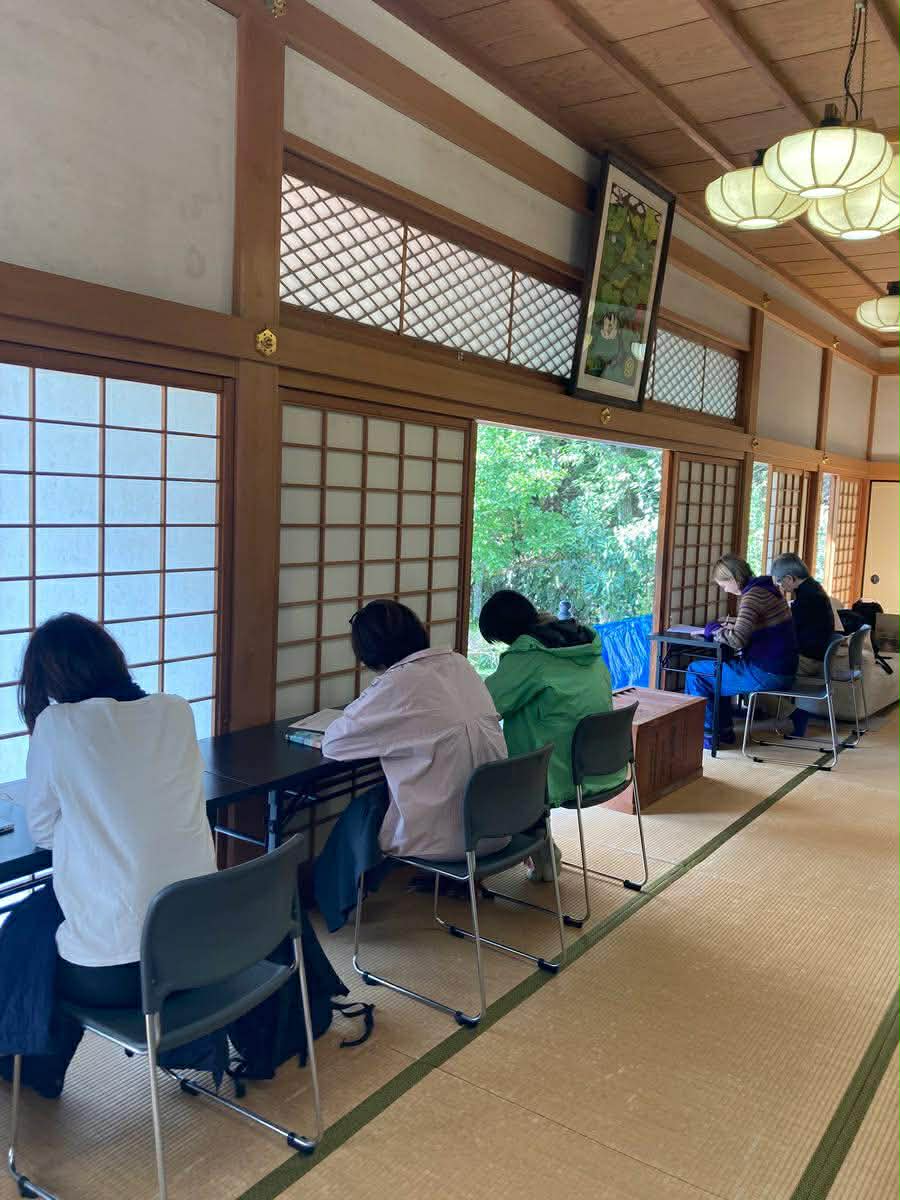
We’ve brought a beautiful, disused traditional Japanese school building back to life as the home for our Danish style folk high school program. It’s where your days will happen, learning, cooking, having meals and talking together with us and the other participants, while you rest each night at accommodation nearby in the village.
The program is divided into 5 parts: 4 weeks and one bonus 3-day retreat. You can freely customize your program, either buy into all parts or choose just some parts of the program. In each part of the program we will explore a different topic.
| Part | Dates | Price (Student / Early Bird / Standard) |
| Week 1: Living in the Local Community | 10–16 Oct | ¥130,000 / ¥140,000 / ¥160,000 |
| Week 2: Exploring Food | 17–23 Oct | ¥130,000 / ¥140,000 / ¥160,000 |
| Week 3: Your Journey | 24–30 Oct | No program this week, and no charge. Explore freely: stay in Tenkawamura for ¥65,450 (7 nights / 8 days, breakfast & dinner included), or take the week to visit Kyoto, Nara, Osaka, or anywhere else in the area. We’re happy to help with recommendations. |
| Week 4: Exploring Life | 31 Oct–6 Nov | ¥130,000 / ¥140,000 / ¥160,000 |
| Special: Tenkawa Maple Retreat | 6–8 Nov | ¥58,000 / ¥62,000 / ¥70,000 |
Student pricing is for anyone currently enrolled in a university or other education program. Early bird pricing applies if you apply before August 10th, after that the standard rate takes over. Applications close August 31st, or sooner if a course fills up before then.Due to popular demand, we’ve extended the application deadline to September 15th!
Read more on each part of the program below.
Join us this autumn. Fill out the application form and one of us will be in touch.
Apply for Autumn 2026
Please register using the registration form below.

Have any questions, or want to talk to us in real life?
We’re hosting a few casual online meetings we call the International Hygge Cafe, a chance to ask us anything, hear more about the program, and just have a relaxed chat. Anyone is welcome, even if you’re only curious and not sure yet.
- Sunday, August 23, 20:00–21:00 (JST) / 13:00–14:00 (Danish time)
- Sunday, August 30, 20:00–21:00 (JST) / 13:00–14:00 (Danish time)
- Saturday, September 12, 20:00–21:00 (JST) / 13:00–14:00 (Danish time)
Week1: Community Immersion Course
Living in the Local Community
Oct 10 (Sat) – Oct 16 (Fri)
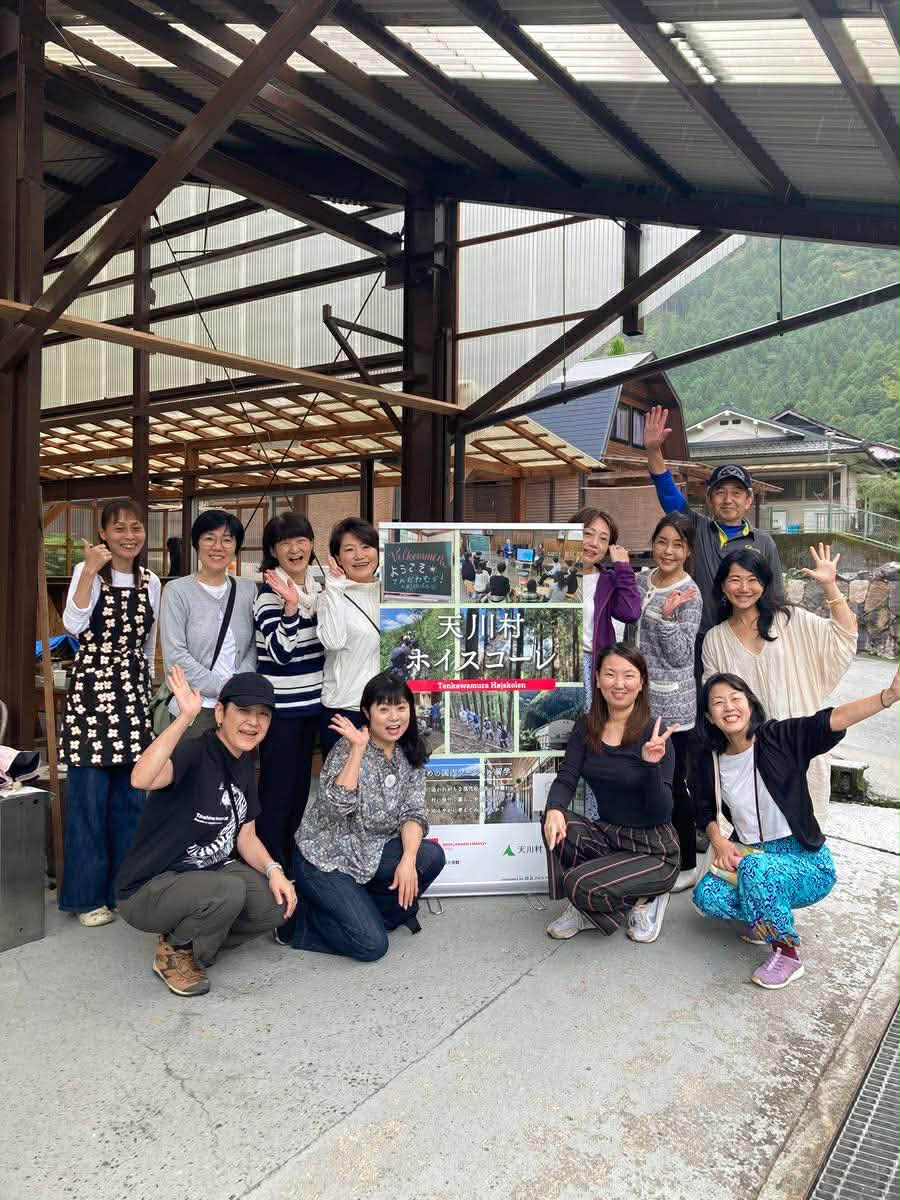
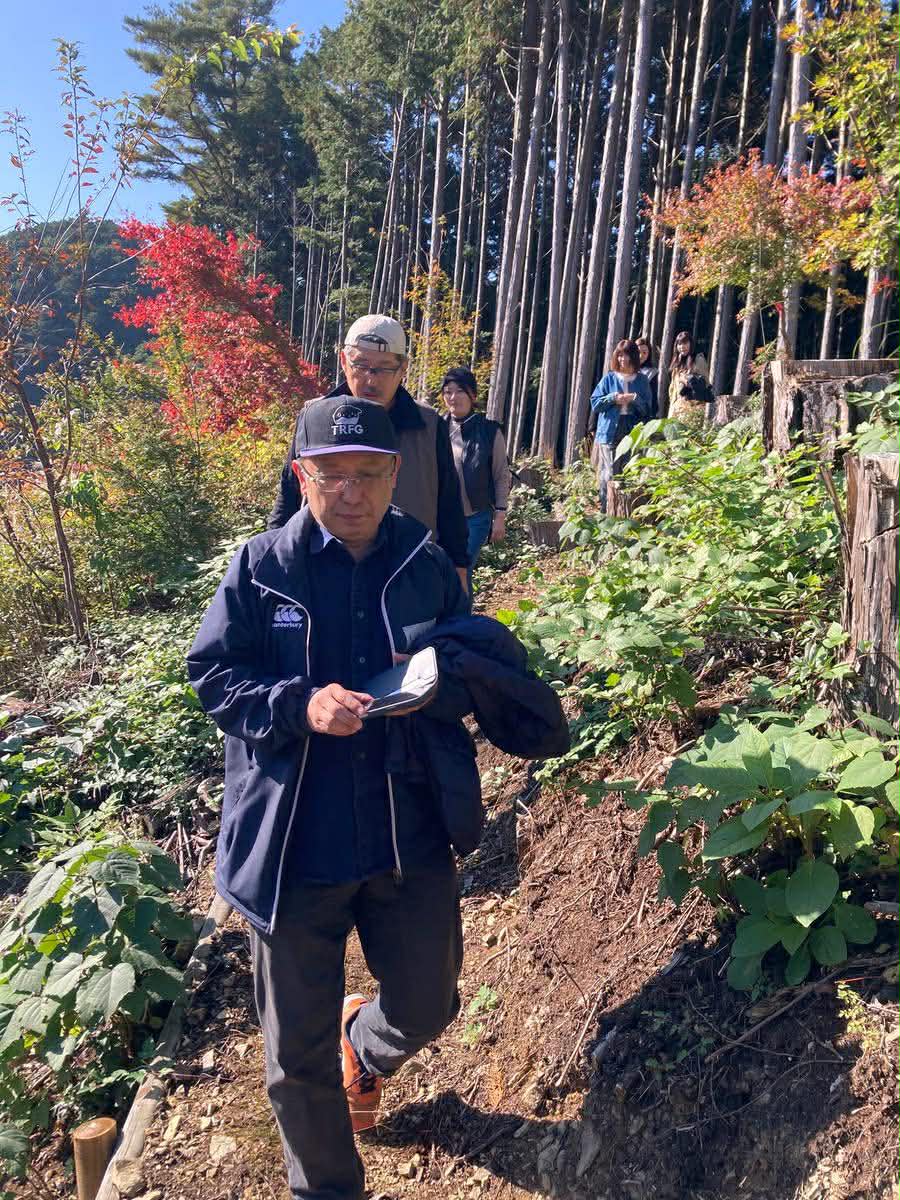
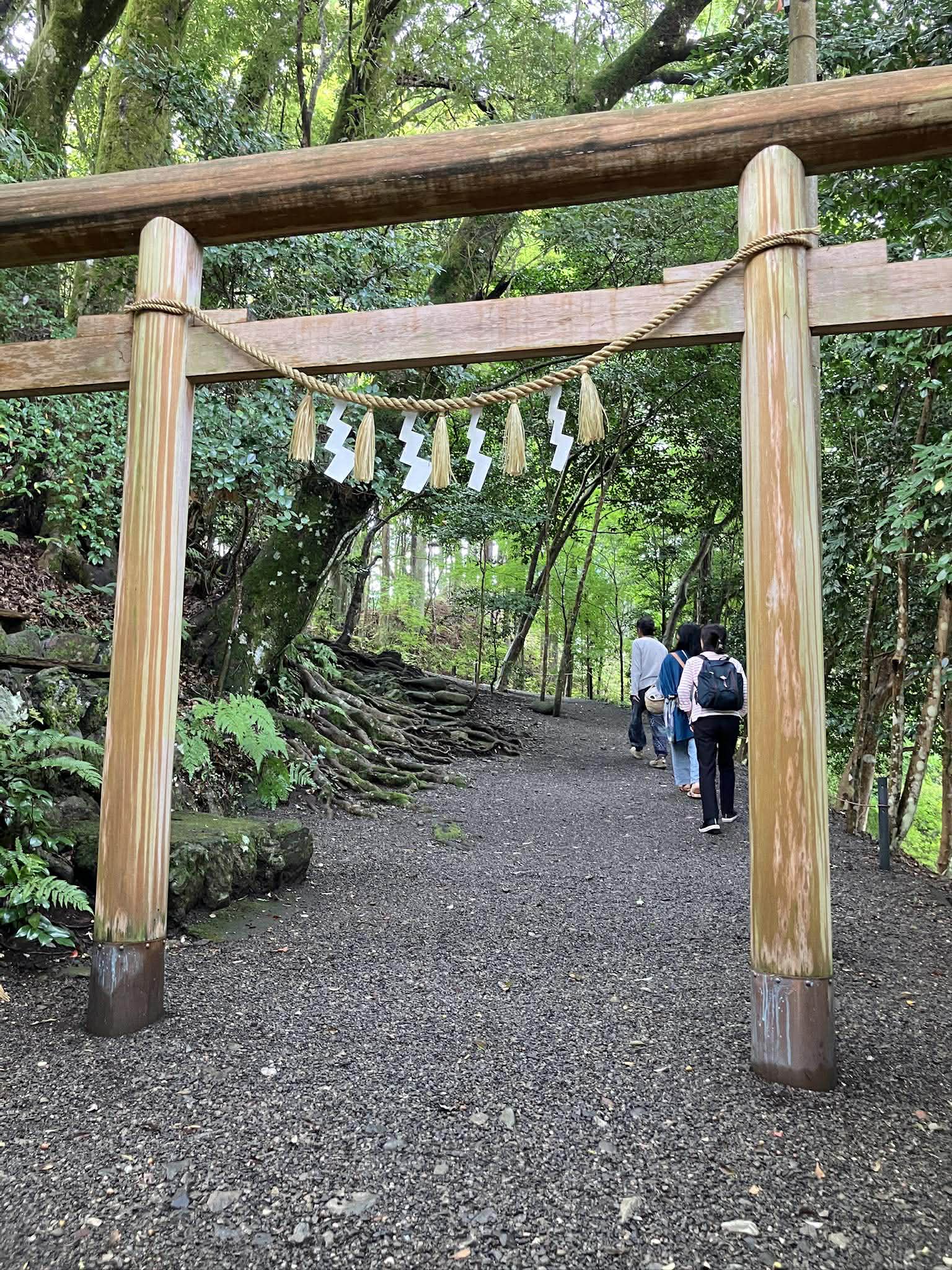
You’ll spend this week meeting the people actually living in Tenkawa right now: farmers, shrine caretakers, families who’ve recently moved here from the city, and hearing directly from them what life in this village is really like. Through honest conversation, not a lecture on “community,” you’ll find yourself thinking differently about your own relationship to the place you call home.
Curriculum details may still change slightly as we finalize the season.

※1 Kiginoyu is a hot spring facility in Tsubonouchi, where natural spring water is heated over a wood-fired boiler, leaving your skin feeling wonderfully smooth.
※2 “Grasping the essence” is a way of thinking aimed at getting to the true heart of things. We explore it using methods from the Japanese book The Textbook of Essence Perception: Dialogue That Creates Everyone’s Understanding (Shueisha Shinsho).
※3 We also invite local residents and newcomers to join us for the bonfire evenings and the farewell party.
Week2: Experiencing Japanese Food: From Farm to Table
Oct 17 (Sat) – Oct 23 (Fri)
You’ll spend this week making and tasting the food of Tenkawa, again and again, learning where each ingredient actually comes from and the food culture built around it. You’ll come to remember something easy to forget in ordinary life: that what’s on your plate only exists because of nature’s own generosity, and that this connection runs through your body as much as your mind.
Curriculum details may still change slightly as we finalize the season.

Week3: Your Journey
Oct 24 (Sat) – Oct 31 (Sat)
This week there is no program scheduled, and we will not charge tuition for this week. Therefore, we invite you to spend this week however you like.
If you would like to explore outside the village, we recommend spending a few days in the cities of Kyoto, Nara, and Osaka. If you choose to, we’ll be happy to help come up with recommendations for a good itinerary.
If you would like to spend more days exploring Tenkawa Village on your own, we also have accommodation available that you can book. In Tenkawa, you can explore the temple and onsen district of Dorogawa, go hiking in the mountains, or go fishing in the mountain stream.
Week4: On Life and Death
Oct 31 (Sat) – Nov 6 (Fri)
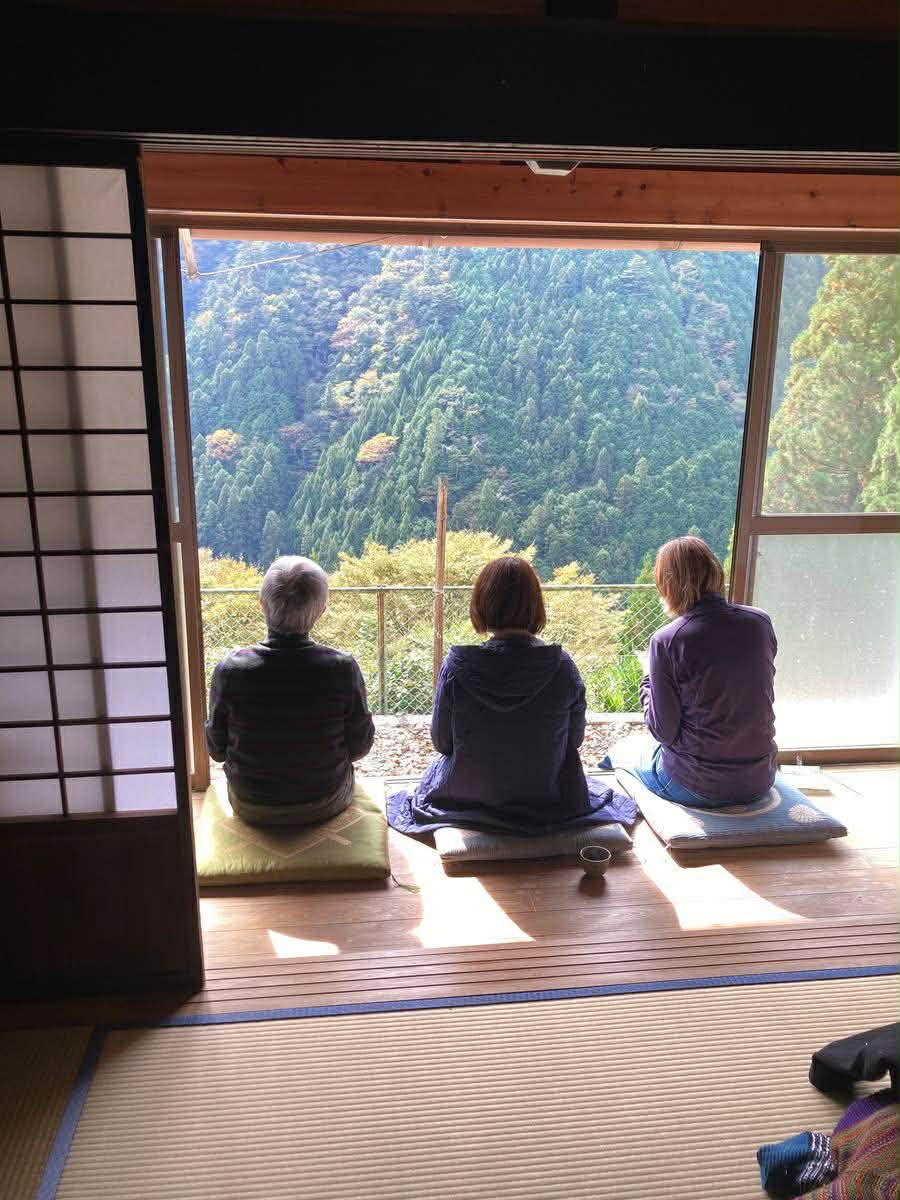
A week for sitting with the biggest questions there are: life, death, and what it actually means to exist. You’ll look again at what it means to be human, and face the questions in your own life that matter most, through honest conversation, quiet reflection, and a few hands-on exercises that bring these questions into the body, not just the mind.
Curriculum details may still change slightly as we finalize the season.

Bonus weekend: Tenkawa Maple Retreat
Nov 6 (Fri) – Nov 8 (Sun)
A shorter, quieter retreat during the village’s most beautiful season, when the whole valley turns red and gold. You’ll spend time with local residents, sit with Tenkawa’s nature, and think about what comes next. Less a course, more a chance to breathe.
Curriculum details may still change slightly as we finalize the season.

※1 Tennyo no Mai, “The Heavenly Maiden’s Dance,” is a beautiful spot named for a legend that Benzaiten, a beautiful heavenly maiden, once danced there.
※2 Kigi no Yu is a hot spring facility in Tsubonouchi, where natural spring water is heated over a wood-fired boiler, leaving your skin feeling wonderfully smooth.
※3 At the merchandise booth of Tenkawa Tenwa no Sato, you’ll help sell local goods while getting to know the residents working alongside you.
※4 We invite as many local residents and newcomers as possible to join the bonfire.
About Nara Folke
Nara Folke is a small, volunteer-run organization based in Nara Prefecture. We’ve been running residential adult education programs since 2021, inviting teachers over from Denmark to join us. Our work has been written up in Grundtvig society newspapers in both Denmark and Norway, and in 2026 we were also covered by Kristeligt Dagblad, a Danish daily newspaper based in Copenhagen, founded in 1896.
Nara Folke is led by Yoko Okuda, who founded the organization and holds an MBA along with a background in social education. Every year since 2021, she and a small team have built this program a little further, always learning from the last one.
We’re also, quietly, a two-way bridge between Denmark and Japan. Danish folk high school graduates and interns from the University of Copenhagen have taken part in what we do here, not as guests being shown around, but as people genuinely living and working alongside us. And once you’re here, there’s no real line between teacher and participant, everyone sits at the same table, and everyone is expected to bring themselves into the conversation, not just receive it.
Past programs
- 2022 — Life Exploring: On Life and Death
- 2023 — Living Lab
- 2024 — A Scandinavian-style learning environment and nature, for parents and children together
- 2025 — Tenkawamura Højskole, Autumn:
Food Exploring, seven days looking at life and land through food (read more)
Life Exploring, seven days of reflection on Life and Death (read more) - 2026 — Ikoma Højskole and others: two nights, three days of opening yourself up through music and dialogue (read more)
Get in touch
Nara Folke, Yoko Okuda
Email: narafolkehojskole@gmail.com
Website:narafolke.com
Facebook:facebook.com/nara.folke
Instagram:instagram.com/nara.folke
Frequently Asked Questions
Mornings start slow. Someone is usually already in the kitchen. We eat together, most days with people from the village, sometimes a shrine keeper, a farmer, or an old inn owner who has stories nobody has written down. Some days we walk the old pilgrim trails through the cedar forest. Some days we cook using vegetables grown a few hundred meters from where we sleep. In the evenings we sit together and talk, properly talk, about the things that don’t usually come up over dinner back home: what we’re doing with our lives, what we’re afraid of, what we still want to become. Nobody here is teaching a class in the way you’d expect. There are no grades. The people who lead sessions are here to open a conversation, not deliver a lecture, and often the most interesting things you’ll learn come from the person next to you at the table.
There’s no single profile. You might be taking a break between jobs, finishing your studies and wondering what’s next, newly retired with time to finally pay attention to something, or a Danish folk high school alum looking for a reason to come back to that feeling. What our participants tend to share isn’t an age or a background, it’s curiosity, and a willingness to sit at a table with strangers and actually talk.
Anyone 18 or older. We don’t ask about your nationality, gender, or professional background. What matters is that you’re willing to show up and take part.
Like Danish folk high schools, this is open to every adult, from 18 and up, and our past programs have drawn a genuinely wide age range. Don’t expect a room full of twenty somethings, and don’t expect a room full of retirees either, expect both.
Light hiking is part of the program, and we have a wide age range among our participants, plenty of younger people but also many seniors who enjoy the gentle exercise of walking through the village and its surrounding nature. If you have real difficulty walking, this program probably isn’t the right fit for you.
We recommend it, as with any international travel.
The Danish folk high school tradition is nearly 200 years old, built on the idea that people learn best not by memorizing facts for an exam, but by living together, talking honestly, and taking their own inner life seriously. We’ve brought that tradition to Japan and let it take root here, shaped by this place and the people of Tenkawa. It’s not a copy of a Danish school, it’s what happens when that idea meets a Japanese mountain village that’s been asking similar questions of its visitors for a very long time.
No. Like Danish folk high schools, we teach through dialogue, not lectures. Teachers and participants learn from each other, sitting at the same table, not on opposite sides of a classroom. There’s no test at the end and nothing to memorize, just real time to live alongside other people, talk honestly, and think seriously about your own life.
Just one week is fine. The program is split into independent parts, and you’re welcome to book only the ones that interest you.
In Tenkawa Village, in the mountains of Nara’s Yoshino district. Most of the program is based at Tenkawa Tenwa no Sato and Ryokan Yamatoya, with sessions and outings across the village itself.
Tenkawa isn’t a resort village, it’s a real, small, remote, mountainous place, with a river running through the middle of it and a long history of people coming here to think seriously about their lives. We didn’t choose it because it photographs well, though it does, especially in autumn. We chose it because the place itself does some of the work: something about the mountains, the quiet, and the people here makes it easier to be honest, with yourself and with the people around you.
The address is 477 Wada, Tenkawa Village, Yoshino District, Nara Prefecture (Tenkawa Tenwa no Sato), or in Japanese 奈良県吉野郡天川村大字和田477番地(てんかわ天和の里). By public transport from Tokyo, take the train to Shimoichiguchi Station (about 4 hours 30 minutes), then a local bus to Tenkawa Kawai (about 54 minutes), roughly 6.5 hours in total. From Osaka’s Abeno Station, it’s about 1 hour 20 minutes to Shimoichiguchi, then the same bus, so about 2.5 hours total. By car, it’s about 1 hour 40 minutes from Nara City, 2 hours from Osaka, and 3 hours 50 minutes from Nagoya. If you’re arriving by public transport, we’ll pick you up at the Tenkawa Kawai bus stop, just let us know your arrival time in advance. Full meeting details are sent once you’ve applied.
You’ll be in Tenkawa, in the mountains of Nara Prefecture, through October and into early November, so pack for cool mountain weather that turns colder as autumn goes on, along with comfortable clothes and shoes for some light outdoor activity. We’ll send more detailed packing guidance once you’ve booked.
Just email us with what you have in mind and we’ll see what we can arrange.
No. We have bilingual staff, and the courses will be explained in both Japanese and English.
Yes. You’ll have plenty of opportunity to meet local residents and talk with them directly.
Every course includes your room, all meals, and the full program.
Yes. Every course includes accommodation, all meals, tuition, and tax.
Yamatoya Inn is a traditional Japanese guesthouse. Guests stay in shared, gender-separated Japanese-style rooms with futons. The rooms are divided by fusuma (traditional sliding partitions).
Cottage Yamatoya is a Western-style log cabin located across from Tenkawa Tenwa no Sato. Some participants may stay here instead. Depending on the number of participants, you may sleep on a futon placed on the wooden floor rather than on a bed.
Evenings at the cottage include a bonfire, and one dinner will be a garden BBQ—a truly hyggelig evening.
All rooms are heated. Please bring your own towel, shampoo, and toothbrush.
If you have any dietary restrictions, just let us know in advance and we’ll do our best to accommodate them. The food throughout the program centers on Japanese ingredients and dishes, so expect plenty of rice, miso, soy sauce, seasonal vegetables, mountain vegetables (sansai), and fish, sometimes wild game too, since much of what we eat comes from what grows or is caught locally. If there’s anything you can’t or don’t eat, tell us before you arrive and we’ll work around it.
Expect a real variety of Japanese home style food throughout your stay, built around rice, miso soup, seasonal and mountain vegetables, and dishes that shift with whatever’s actually available in Tenkawa that week, from fresh river fish to wild herbs foraged nearby. Meals are as much a part of the program as anything else, and several of them will be ones you help cook yourself.
WiFi is available at the inns and at some cafes around the village.
Yes, and it’s free to use throughout your stay.
Most places accept card, but it’s a good idea to always carry some cash in Japan, for the times you’ll need it especially in a rural place like Tenkawamura. There is an ATM at the Post Office in Tenkawamura where you can withdraw yen. Since most of your living expenses are prepaid as part of your stay, you’ll mainly need cash for souvenirs, snacks, or a visit to the onsen.
Laundry is free throughout your stay. You’ll need to cover your own travel to and from Tenkawamura, but once the program starts, local transport during your stay is covered.
We’re Nara Folke, a small organization that’s been building this, one program at a time, since 2021. We’re not a university, a travel company, or a government initiative, even though Tenkawa Village and the Danish Embassy have both generously supported what we’re doing. It started small, and it’s still small: every year we run a program, learn from it, and build the next one a little better. If you come this autumn, you’ll be joining something a handful of people are still building, with real care, alongside the village that hosts us.
Tenkawa Village and the Royal Danish Embassy have both supported the program, and in 2026 we were written up in the Danish newspaper Kristeligt Dagblad. We’re proud of that, but we’d rather you judge us by what it’s actually like to spend time here than by who’s endorsed us.
Please make a bank transfer to our Japanese bank account. We will send you the bank account details after we receive your application.
If you become sick or injured during the program, we will take you to the local medical clinic in the village. We also have local residents with nursing qualifications who can provide advice and support if needed.
Closing / CTA
If any of this sounds like you, we’d love to have you. Spaces are small on purpose, usually no more than a handful of people per course, so it stays personal.


Apply before August 10th for early bird pricing, applications close August 31st or once a course fills up, whichever comes first. Due to popular demand, we’ve extended the application deadline to September 15th!
Apply for Autumn 2026
Please register using the registration form below.